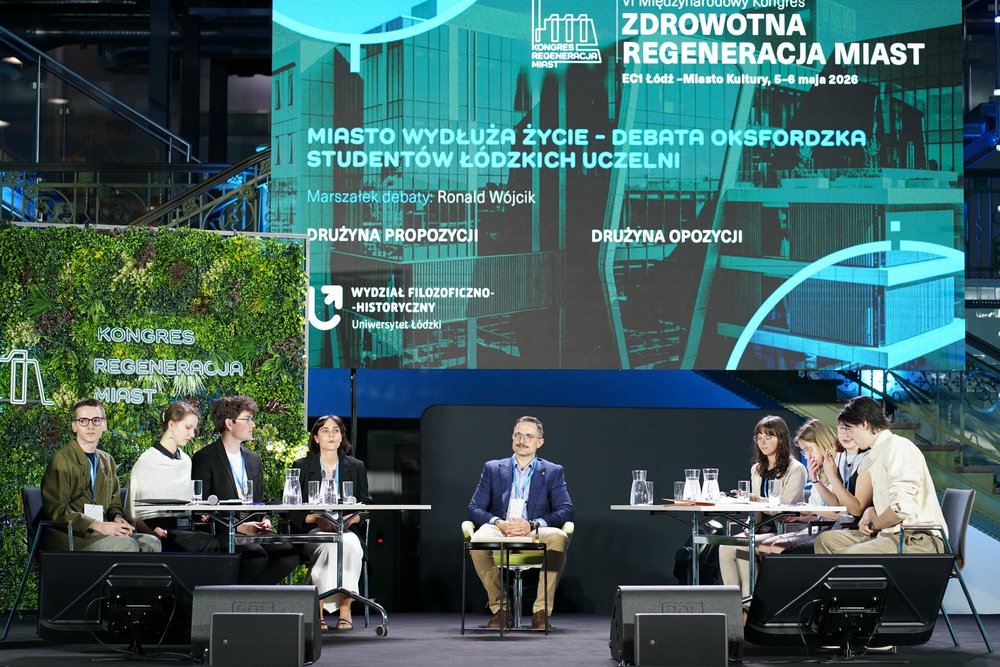
Students take the floor at the end of the Congress
The Oxford-style debate “The city extends life” was one of the closing events of the Healthy Urban Regeneration Congress. The initiator of the debate was dr hab. Mariusz Sokołowicz, Associate Professor at the University of Lodz, Dean of the Faculty of Economics and Sociology of the University of Lodz.
The event was exceptional not only because of its topic, but also due to the composition of the teams. Students from four Łódź universities took part in the debate: the University of Lodz, Lodz University of Technology, the Strzemiński Academy of Fine Arts Łódź, and the Medical University of Lodz. The participants had met only a few weeks earlier, and the sides of the debate they were to represent were drawn just before the debate began.
This meant that, as part of their preparations, they had to develop arguments for both the proposal team and the opposing side. They handled this task admirably –overcoming their nerves, responding to their opponents’ arguments and engaging in an intense yet cultural discussion.
The names of those who took part in the debate should be mentioned. Each team consisted of a core line-up as well as reserve members, who nevertheless participated fully in the preparation process.
Proposals Team
- Zuzanna Kruszyńska (Medical University of Lodz)
- Zofia Jasik (The Strzemiński Academy of Fine Arts Łódź)
- Adam Miziołek (Lodz University of Technology)
- Adam Szebesczyk (Lodz University of Technology)
- Wiktoria Świątczak (University of Lodz)
- Jakub Robak (Medical University of Lodz)
Opposition Team - Julia Isert (University of Lodz)
- Jakub Horosz(The Strzemiński Academy of Fine Arts Łódź)
- Karolina Kuryłło (The Strzemiński Academy of Fine Arts Łódź)
- Krzysztof Bogdański (Medical University of Lodz)
- Eliza Łakoma (Lodz University of Technology)
- Małgorzata Podsędkowska-Szymczak (Lodz University of Technology)
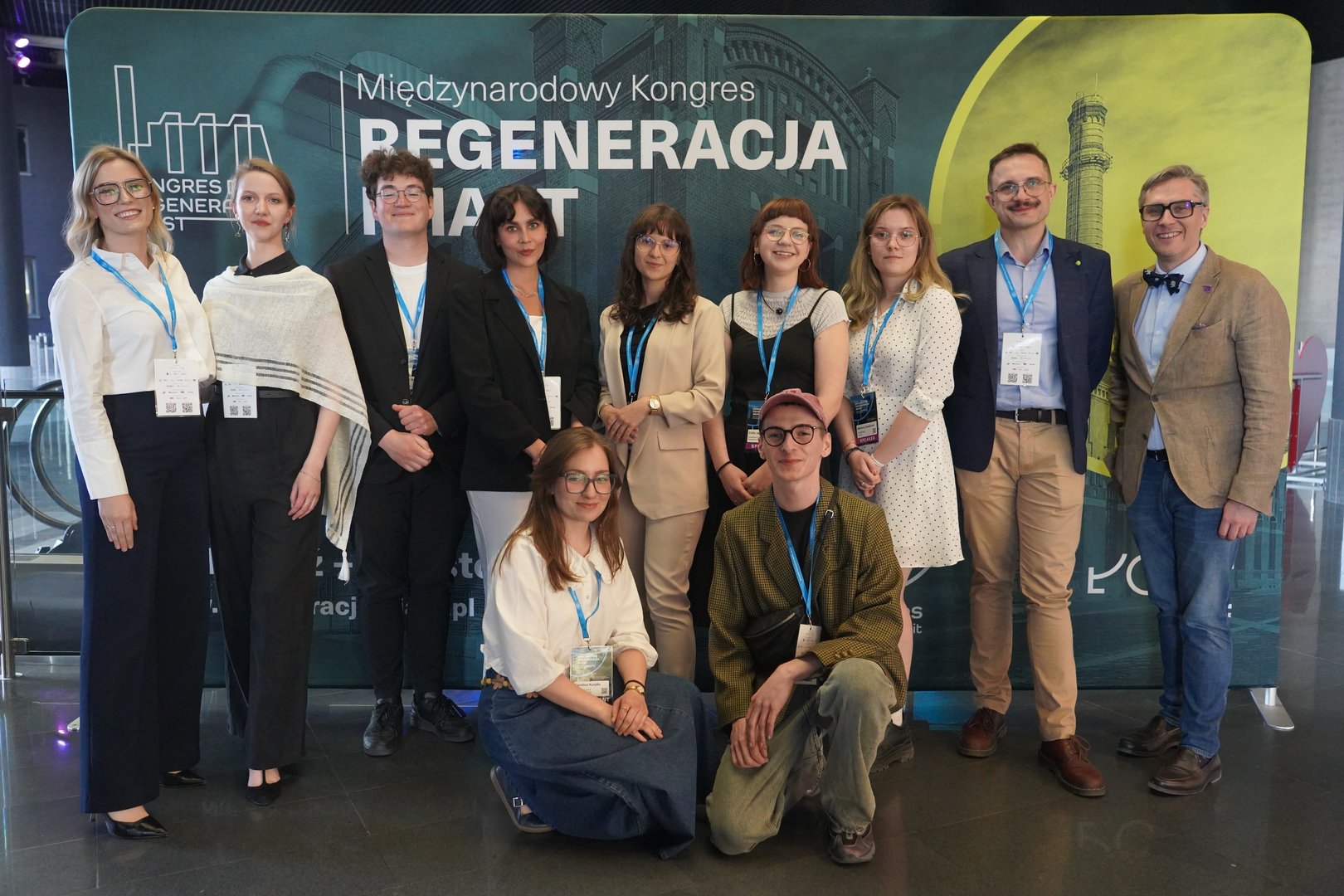
Does the city really promote health?
The debate participants grappled with a thesis that had recurred in many Congress discussions over the two days: does the contemporary city extend life?
The proposals team pointed to the advantages of urban living: better access to specialists, hospitals, preventive screenings, health education, public transport, social services and institutions that can support residents in maintaining good health. The city – argued the speakers – is able to diagnose problems more quickly, respond more effectively to social needs, and offer residents greater opportunities for development and for using public infrastructure.
The opposition side, however, reminded the audience that the city can also be a source of strain. They pointed to smog, noise, stress, loneliness, sedentary lifestyles, urban heat islands, economic pressure and inequalities in access to services and care. From this perspective, the city does not so much extend life as it often attempts to remedy the damage it creates.
The opposition wins, but the quality of the debate is what matters most
The debate, professionally prepared and moderated by Ronald Wójcik from the Faculty of Philosophy and History, was accompanied by outstanding oratorical performances by the students. The audience was able to observe not only a clash of arguments, but also a display of rhetorical skill, quick thinking and teamwork.
Ultimately, it was the opposition team that persuaded the audience. The outcome showed that arguments highlighting the risks associated with urban living proved more convincing – even if not all of them were fully supported by facts. The essence of this debate format lies not only in presenting knowledge, but also in the ability to construct arguments logically, respond to counterarguments and persuade listeners.
The city as a space for health – under certain conditions
The debate demonstrated that the answer to the question of the city’s impact on the length and quality of life is far from straightforward. A city can be a space that supports health, but only if it is consciously designed, managed and co-created with residents’ well-being in mind.
In the Congress summary, Prof. Jerzy Hausner emphasised that discussions about health cannot be limited to hospitals, doctors and healthcare systems. Health should become one of the key developmental values of the city – a reference point for urban planning, education, culture, transport, social and environmental policy.
A regenerative approach to health means more than reacting to crises and repairing damage. It involves creating living conditions that strengthen resilience, activity, social relations, a sense of belonging and shared responsibility for place.
A healthy city is also a community
A healthy city is not only about infrastructure, public services and access to care. It is also about whether residents feel at home – in their street, neighbourhood, community and city.
The debate involving students from Łódź universities was an important voice in this discussion. It showed that urban regeneration begins with shared reflection on the future, with a willingness to listen to different perspectives and with the courage to ask questions that do not have simple answers.
Edit and photos: Michał Gruda (Centre for External Relations and Social Responsibility of the University, University of Lodz)